Description
Parametric
Service
Comprehensive Energy Management and Control System for Huaquan PV-Storage-Diesel Microgrids (Includes PV-Storage Controller + Industrial Gateway) – Product Overview
I. Core Hardware Components for System Control
The complete microgrid intelligent dispatch platform relies on two core control units working in tandem. Designed for 1.3MW integrated PV, energy storage, and generator set projects, it enables comprehensive equipment data acquisition, intelligent dispatching, remote O&M, and coordinated switching across multiple power sources:
1. Huawei SmartMGC5000B06GL Intelligent PV-Storage Controller
Basic Specifications
Model: SmartMGC5000B06GL (Huawei original controller dedicated to PV-storage systems)
Power Supply: Adaptive DC 12V/24V; compatible with low-voltage power supplies in energy storage cabinets and power distribution rooms.
Core Interfaces and Functions
PV and Energy Storage Data Acquisition Interfaces
AC sampling terminals (Ua1/Ub1, Ua2/Ub2) supporting voltage acquisition up to 480V; accurately reads output voltage, current, and power from PV inverters and energy storage PCS units. CT (Current Transformer) interfaces capture real-time load consumption data for each branch, enabling precise calculation of power generation, consumption, and peak-valley arbitrage revenue.
Multi-channel Communication Buses
Equipped with MBUS, COM1/COM2, Gigabit Ethernet (ETH) ports, 4G (all-network compatible) connectivity, and SFP fiber-optic expansion ports. Compatible with a wide range of equipment including PV inverters, energy storage converters, generator sets, GGD distribution cabinets, and electricity meters. Supports standard industrial protocols (Modbus, SPRS485) for seamless integration with energy equipment from various brands.
Digital Input/Output (DI/DO)
DI high-voltage acquisition terminals monitor the real-time status of three power sources: grid, energy storage, and generator sets. DO passive output contacts enable coordinated control of cabinets, generator start/stop, and circuit breaker switching. This facilitates fully automated coordinated switching between PV, energy storage, and diesel generators, including automatic start commands triggered by low energy storage levels or grid voltage loss. Remote O&M Capabilities
Supports 4G connectivity via Mini SIM card, local USB debugging, and long-distance fiber-optic networking; features dual data retention (local storage plus cloud upload); provides real-time alarms (over-voltage, overload, islanding faults, generator unit faults); and enables remote monitoring of full-system operational data via mobile phones and web browsers.
Positioning: Acts as the core scheduling "brain" for the microgrid, managing power balance calculations for the integrated PV-storage system and automatically executing strategies: prioritizing PV self-consumption → charging energy storage with surplus power → discharging energy storage during low sunlight → automatically starting the methanol generator unit as a backup when energy storage is depleted; ensures seamless switching between grid-tied and off-grid (islanded) modes.
2. Dual-SIM 5G Industrial Energy Gateway
Hardware Configuration
2.1 Power Supply: Wide-range DC 9–30V input, adaptable to complex factory power distribution environments; dual SIM slots (SIM1/SIM2) with hot backup; supports dual-link redundancy across major carriers (China Mobile/Unicom/Telecom) to prevent network disconnection.
2.2 Network Ports: 4 Gigabit Ethernet ports (ETH0/ETH1/ETH0C/ETH1C), allowing simultaneous connection to controllers, cameras, and backend monitoring computers.
2.3 Multi-channel I/O Terminals: Multiple relay inputs/outputs (CPE/ENC/DEF) for collecting signals from power distribution cabinet switches, energy storage fire safety systems, and generator unit alarms; supports LoRa wireless expansion for long-range data collection from on-site sensors on PV panels and energy storage cabinets.
2.4 Status Indicators: Visual indicators for power, operation, 5G status, signal strength, and faults, facilitating rapid on-site troubleshooting of communication issues.
2.5 Core Function: Data Transmission and Expanded Data Acquisition
Acts as a transmission bridge between the controller and the cloud platform; dual 5G link redundancy eliminates monitoring loss caused by factory network interruptions.
Expands wired/wireless data acquisition channels to compensate for limited controller I/O and communication ports; enables unified integration of power distribution cabinets, energy storage fire safety systems, generator unit sensors, and factory security equipment.
Supports encrypted data transmission to ensure the security of energy data in industrial and commercial parks; suitable for remote O&M and unified management of multiple sites within a corporate group. II. Complete Architecture Logic of the PV-Storage-Diesel Microgrid
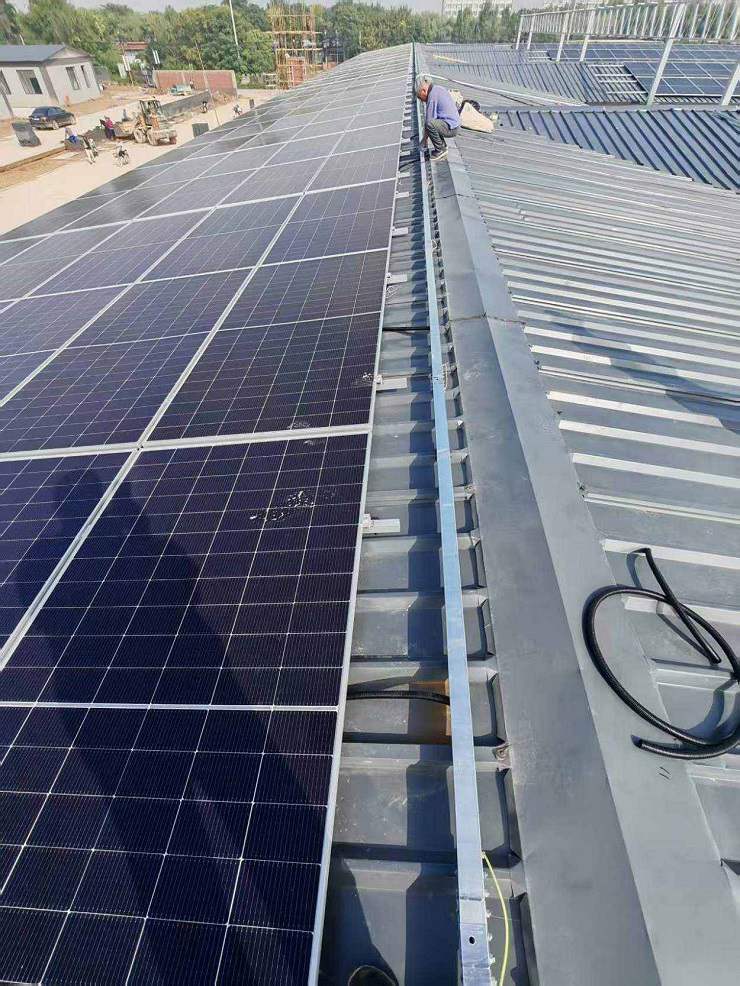
1. Rooftop PV array → PV inverter → Huawei PV-storage controller (core scheduling)
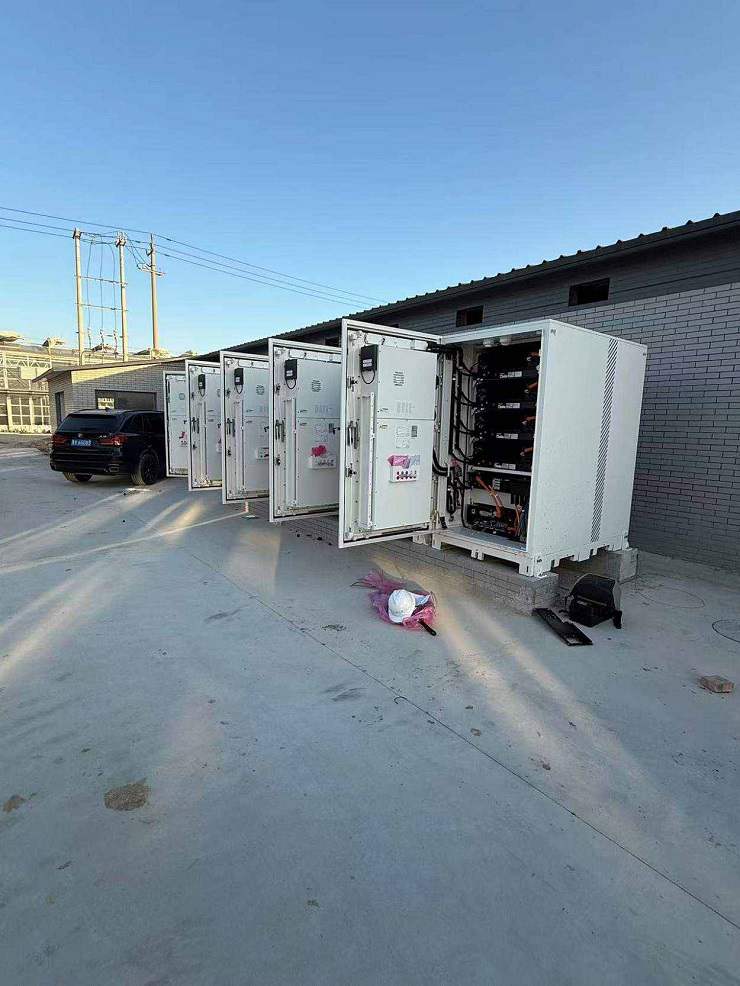
Lithium-ion energy storage cabinet + PCS (Power Conversion System) → Connection to controller power sampling circuit
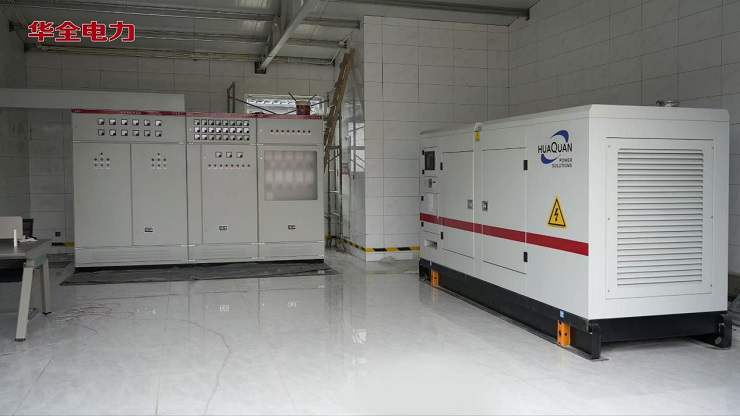
2. Huaquan generator set → RS-485 communication connection to controller; start/stop signaling linked to DO (Digital Output) terminals
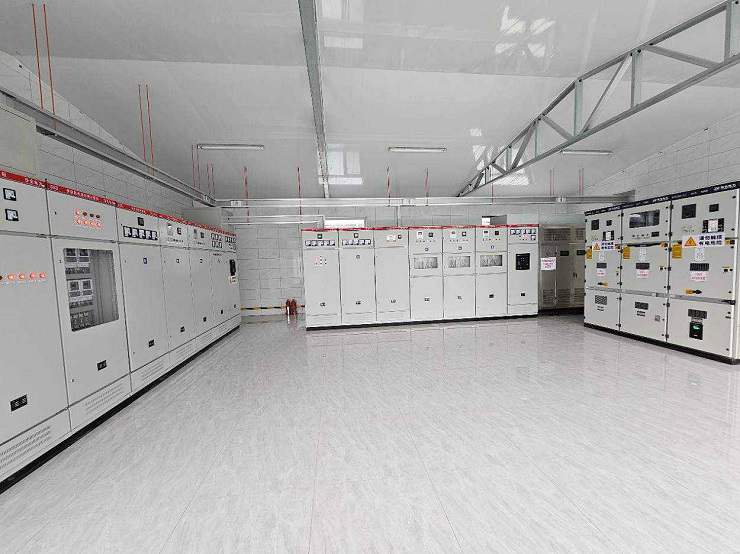
GGD intelligent triple-source power distribution cabinet → Voltage/switch status acquisition via DI (Digital Input); controller issues switching commands
3. 5G industrial gateway → Interfaces with controller; enables remote cloud monitoring, data storage, and remote parameter configuration
4. EMS (Energy Management System) cloud platform: Real-time monitoring of power generation, energy storage SOC (State of Charge), load power, generator runtime, and electricity cost savings
III. Key Advantages of the Dual-Hardware Configuration
1. Fully automated intelligent coordination; unattended operation
The PV-storage controller autonomously calculates power balance, and the gateway ensures stable data transmission, eliminating the need for manual monitoring. The diesel generator starts automatically during cloudy weather or power outages and shuts down when grid power returns; millisecond-level power switching ensures uninterrupted power for livestock farming or factory loads.
2. Unified monitoring of all equipment; data visualization
Data from all equipment—PV, energy storage, grid power, backup generators, and distribution cabinets—is aggregated into a single backend system. Power generation, fuel consumption, peak/off-peak electricity costs, and equipment faults are visible at a glance, facilitating easy calculation of electricity costs for the enterprise.
3. Stable and reliable communication; adapted for harsh industrial environments
The controller features an industrial-grade wide-temperature design, while the gateway utilizes dual-SIM 5G backup and supports multiple communication methods (fiber optic, Ethernet, RS-485). This ensures long-term stable operation in workshop and outdoor energy storage cabinet environments, preventing monitoring connection drops.
4. Flexible scalability; adaptable to project expansion
The gateway reserves multiple network ports, I/O, and LoRa expansion interfaces. Future additions—such as increased PV capacity, energy storage cabinets, charging piles, or backup generators—can be integrated into the system simply by adding data acquisition points, without needing to replace the core controller. 5. Specialized strategy for generator-microgrid integration
The controller features a built-in algorithm for coordinated operation between diesel generators, PV systems, and energy storage. Users can customize parameters such as minimum state-of-charge (SOC) thresholds, generator start/stop delays, and peak/off-peak charging/discharging schedules. This enables alignment with the staggered power usage patterns of aquaculture facilities and factories, maximizing savings on fuel and electricity costs.